
One standard, so every read compares.
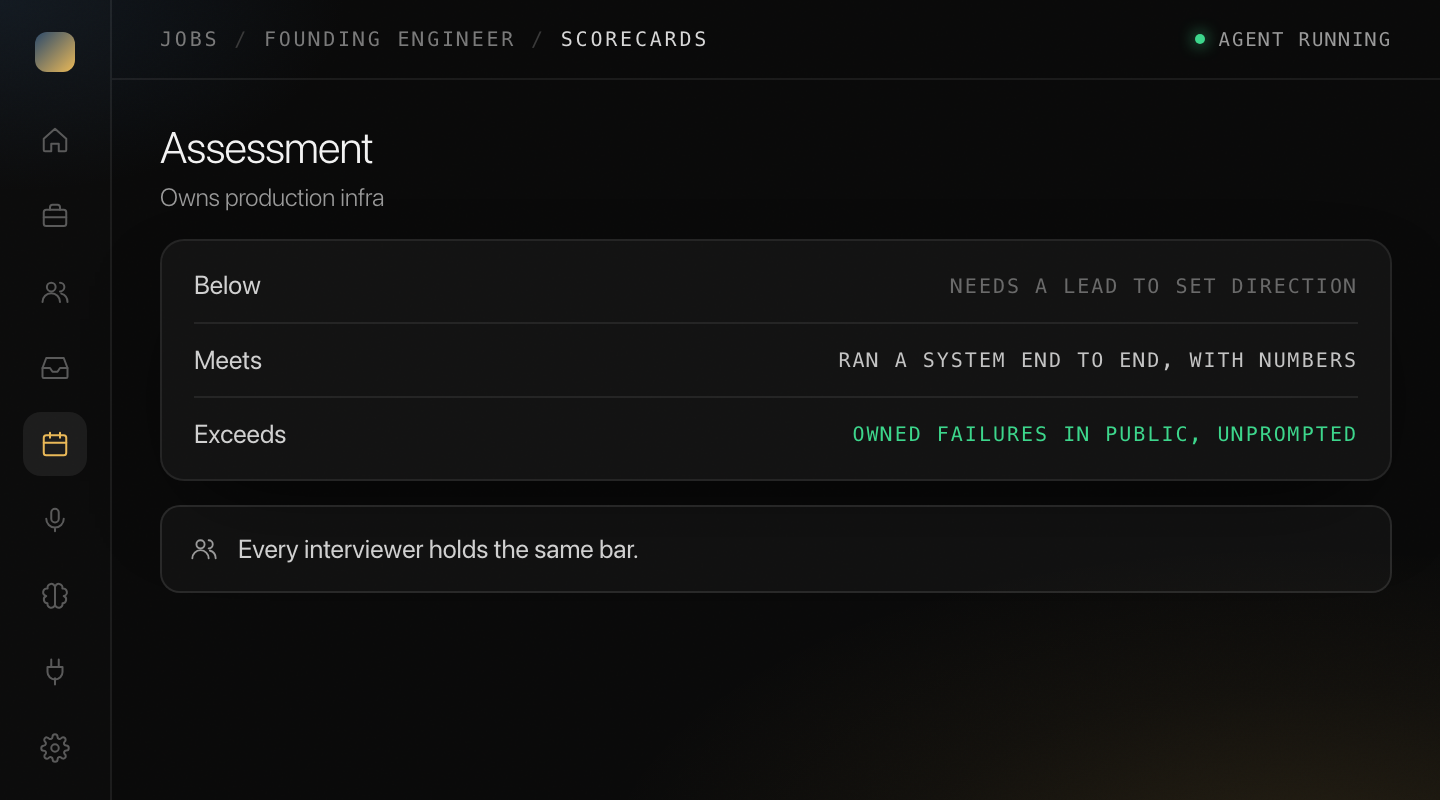
Set what each stage should establish. The agent turns that goal and the role's FitCheck traits into assessments with a shared Below, Meets and Exceeds bar.
How it works.
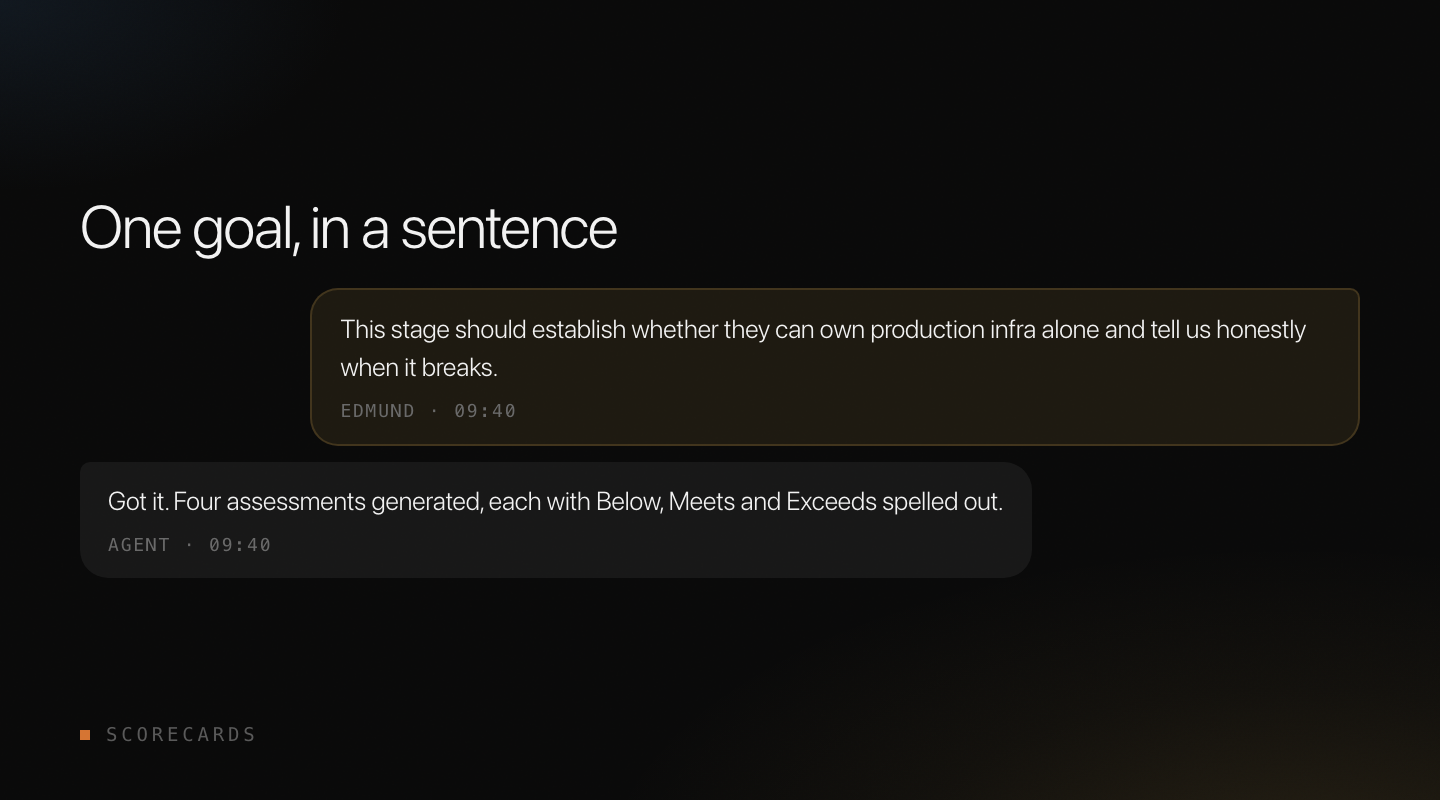
Goal in, assessments out
Write one sentence about what the interview should establish. Superposition generates the assessments from that goal, the stage format and the role's traits. Edit any of them.
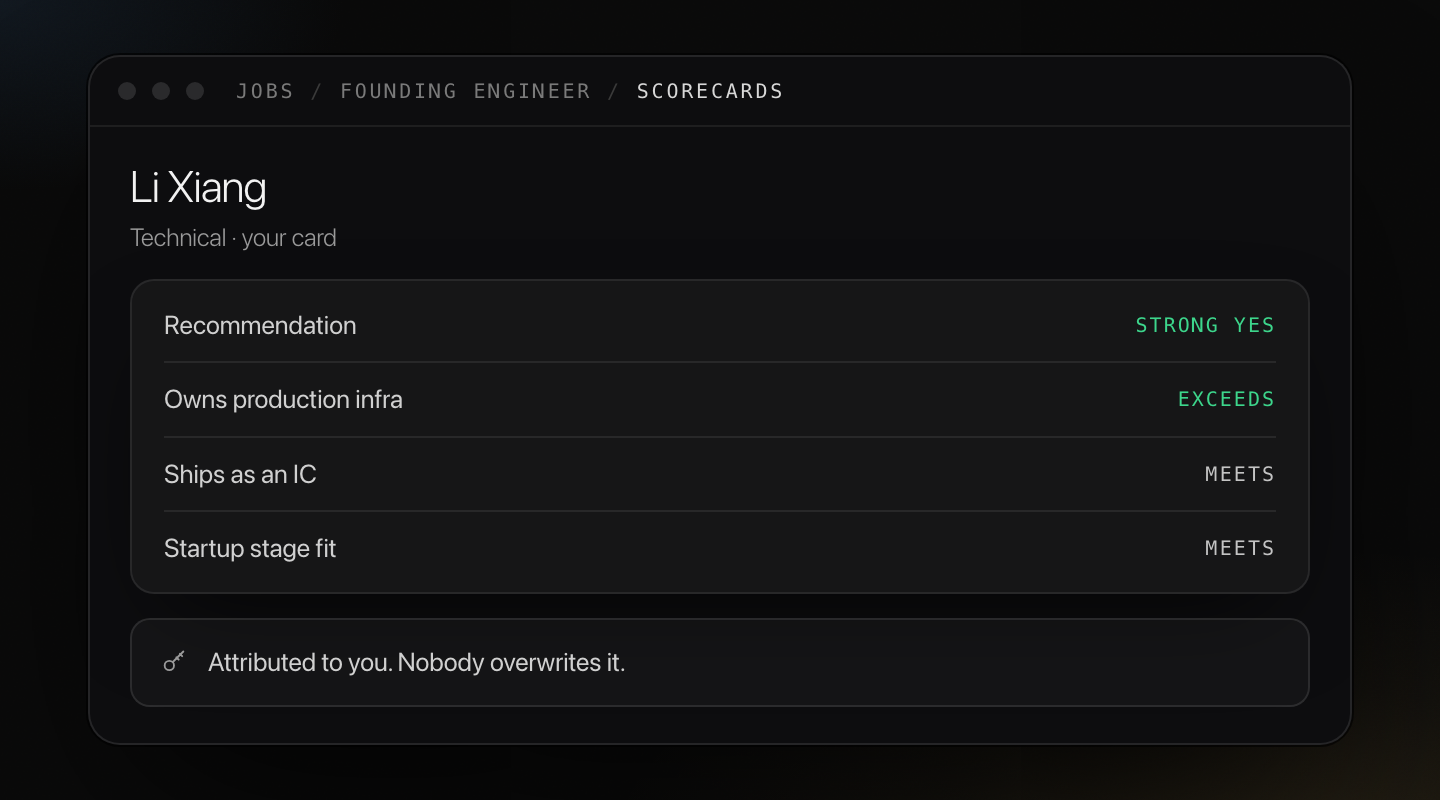
Each interviewer, their own card
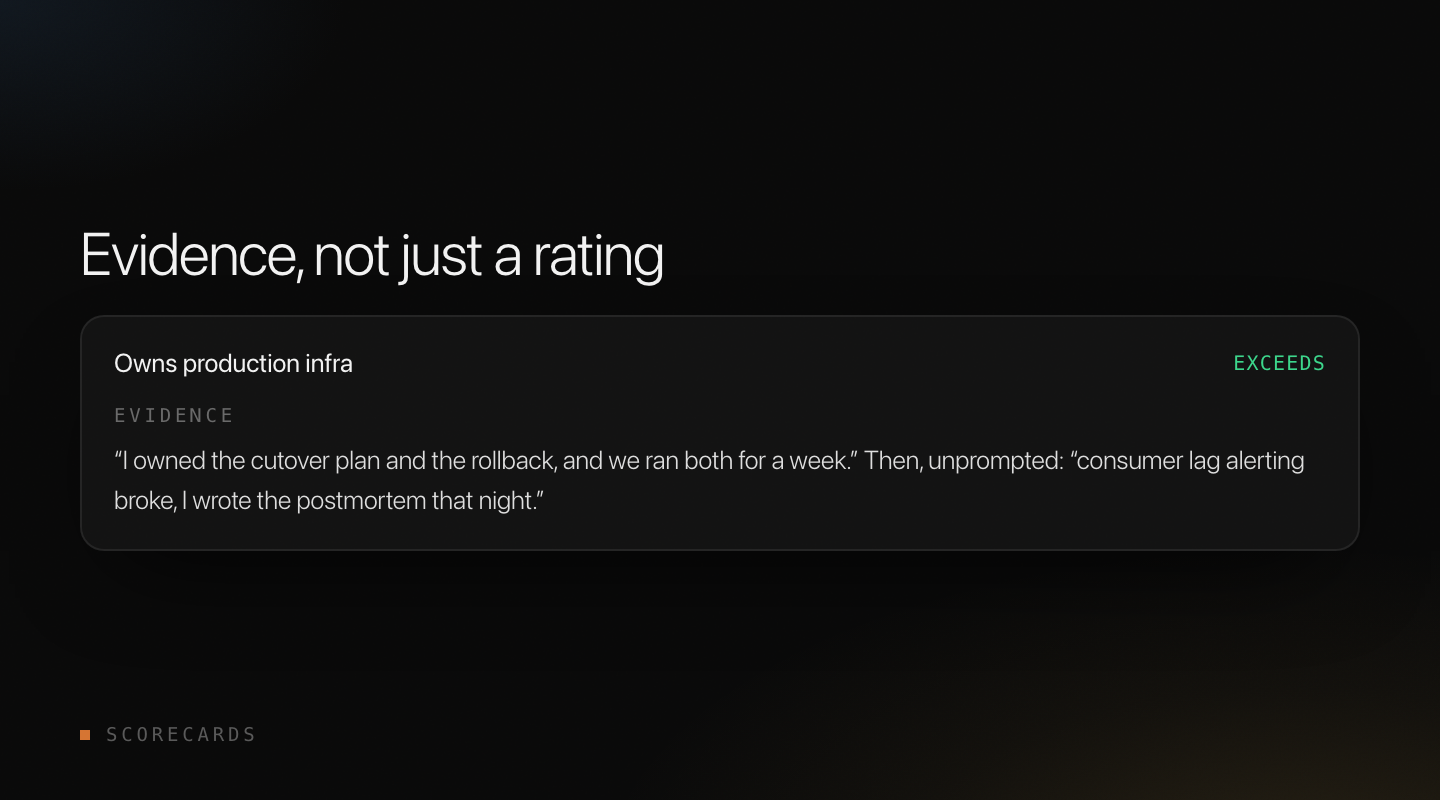
Strong yes to Strong no, ratings per assessment, evidence notes. Every scorecard is attributed to the person who wrote it and never overwrites a teammate's.
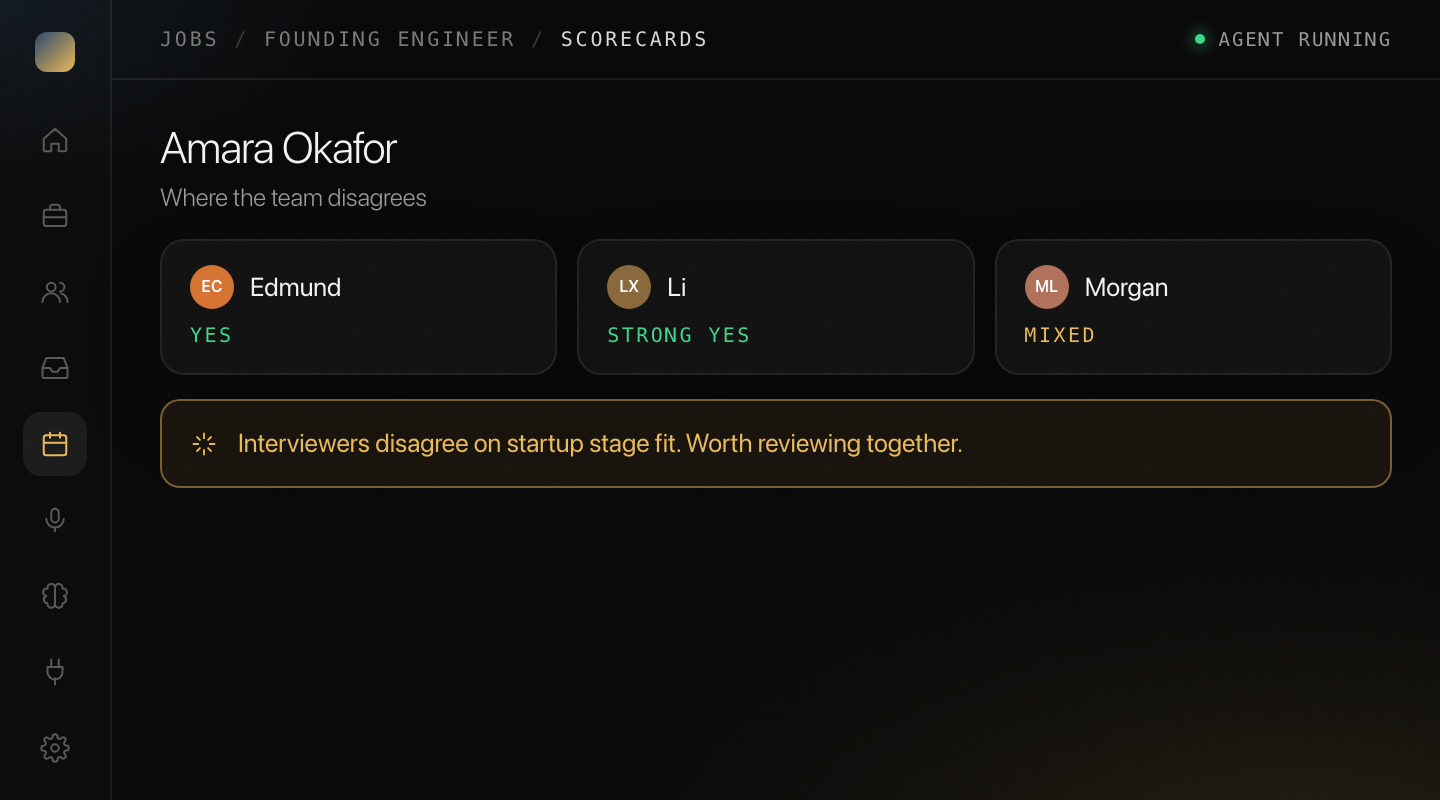
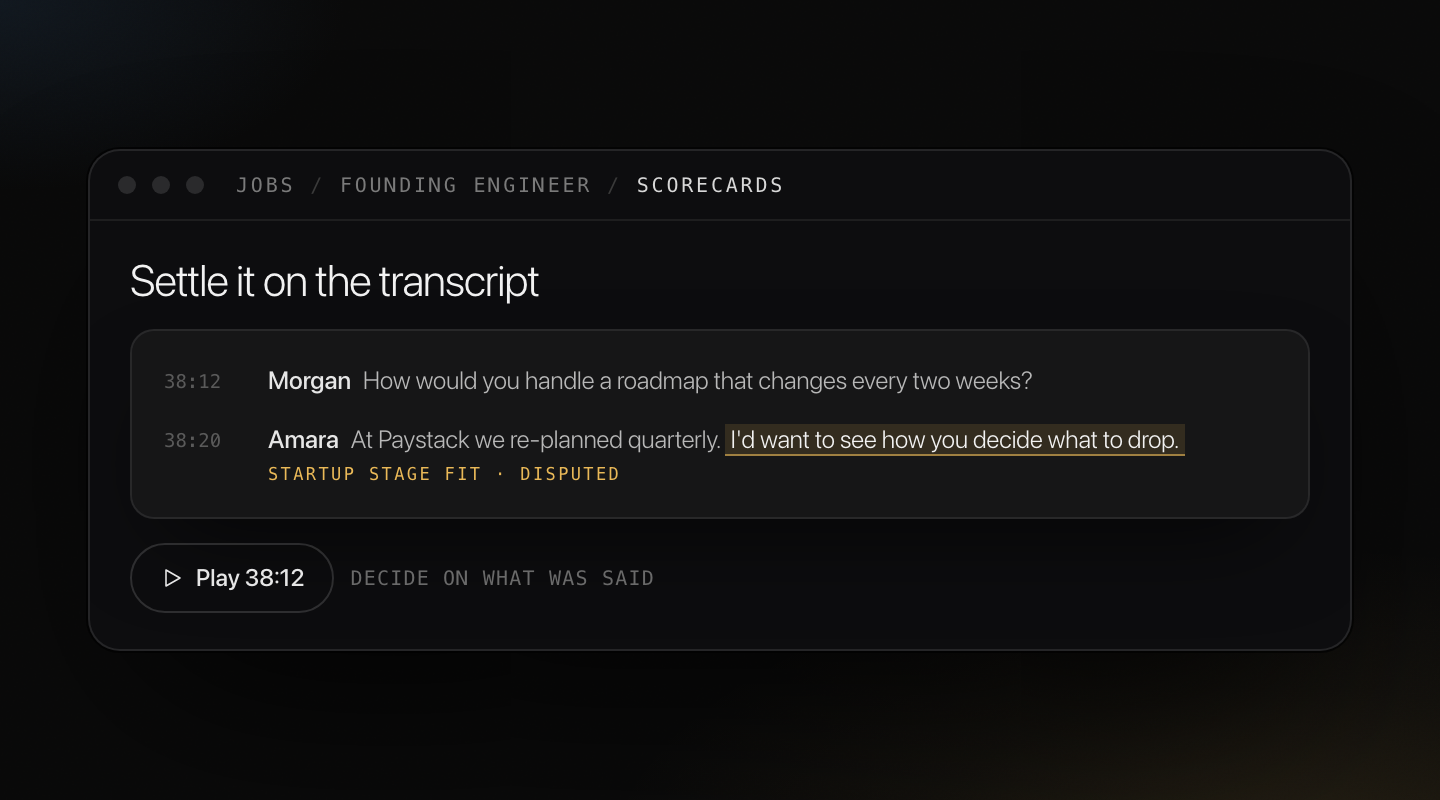
See where the team disagrees
An Interviewers disagree label marks the conversations worth reviewing together. Jump to the transcript or recording to settle it on evidence.
Saving a card moves nobody
A scorecard records a judgment. The next-stage decision is a separate call the hiring team makes after reading everyone's feedback.
Setup guide in the docsDiscover more features
Get started
Find your perfect weirdo
The person who would fail anywhere else and belongs with you. Tell us the role and we will show you who the agent would go after first.